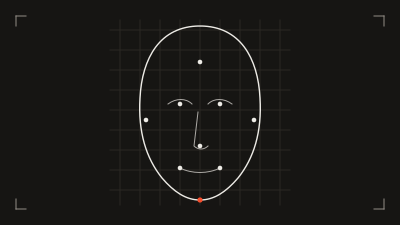
01Start here
What Is Looksmaxxing?
Most of what moves how attractive you look is not your bone structure, and the research on that is clearer than the forums suggest.
Moderate evidence
The science library
What the research actually says about the things people do to look better — the ones that work, the ones that half-work, and the ones that are forum lore. Every article is graded by how strong the evidence really is.
00Four grades, stated every time
Each article is graded by the claim its title asks about. The claims inside it carry their own grades, so you always know how much weight a sentence can bear.
01Science
What looksmaxxing is, what attractiveness research really says, and where the evidence-backed levers are.
01Start here
Most of what moves how attractive you look is not your bone structure, and the research on that is clearer than the forums suggest.
02Science
Airways, tongue posture and face fat: what can change the shape of a face, when, and what cannot.
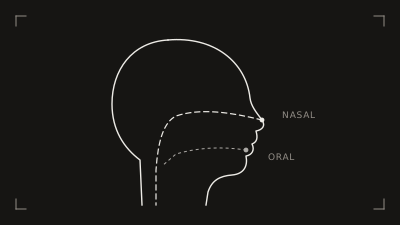
02Face structure
The link between breathing and face shape is one of the most repeated ideas in looksmaxxing, and the honest version is narrower, and more useful, than the one you have heard.
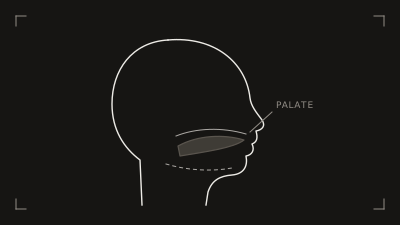
03Face structure
Mewing promises a new jawline from a resting tongue, and the evidence for that is close to nothing, but the idea sits right next to one that genuinely works.
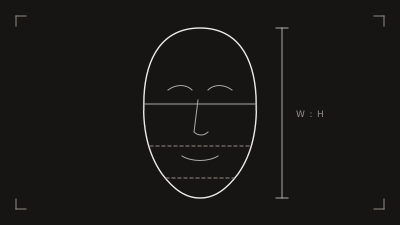
04Face structure
Your jawline may already be there. The research says how much fat loss it takes before other people notice, and it is less than you might think.
03Science
The best-evidenced anti-aging habit there is, the skincare that has trials behind it, and what actually works for hair loss.
05Skin & hair
One habit has a 4.5-year randomized trial behind it. Most of the rest of the skincare aisle does not.
06Skin & hair
Two treatments have large trials behind them, one of them comes with side effects you need to hear about first, and the rest of the list is thinner than its marketing.
04Science
Sleep, training and posture — the habits that change how a face and a body read to other people.
07Body & habits
Sleep changes how your face reads to strangers, though less dramatically than the internet claims, and its biggest effect on your looks may run through your appetite.
08Body & habits
How strong you look drives how your body is rated more than almost anything else measured, and the benefits of lifting run well past the mirror.
09Body & habits
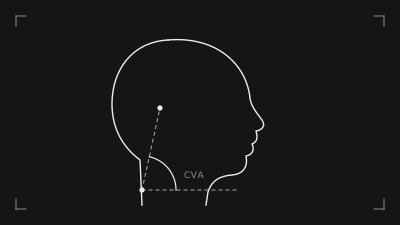
Posture is one of the few things about how you look that trials show you can measurably change, and an open posture changes how people respond to you.
The quiz and the scan show which factors are holding you back, so you can start with the research that applies to you.